Bikepacking
Old Petauke Road by bicycle
Contributed by Marc Tiburski
Old Petauke Road, Zambia
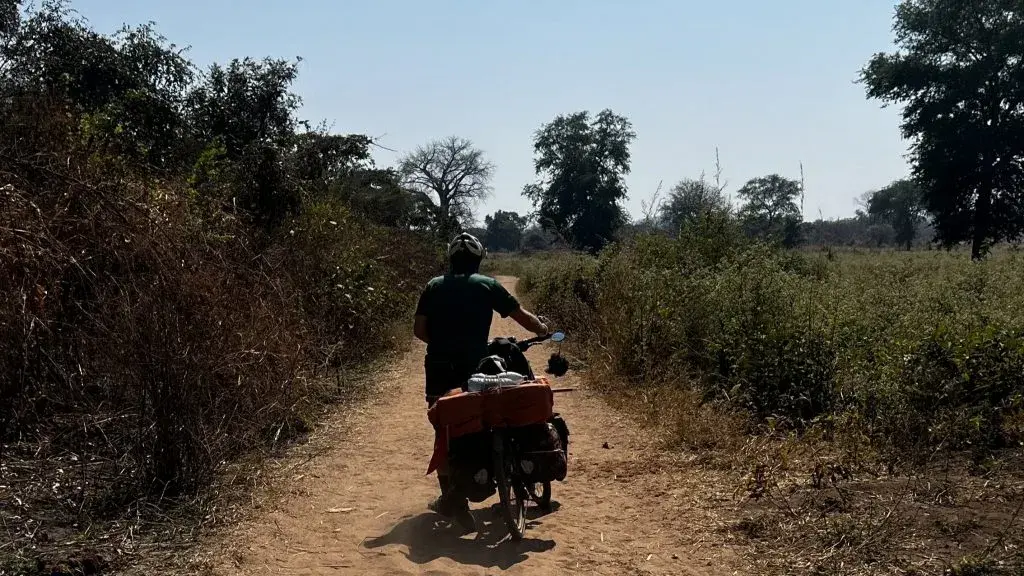
A ride along Zambia's famous Old Petauke Road, through a wildlife corridor thick with elephants, hippos and tsetse flies, ending with a bout of malaria and a farewell to a riding companion in Chipata.
- Distance
- 130
- Stages
- 5
Also found on their personal blog
I was born in 1991 and grew up in Freudenstadt in the Black Forest. Sport shaped my everyday life for a long time, through competitions as well as through my work in a sports shop.
Shortly after my thirtieth birthday I left training plans and start numbers behind and set off by bicycle towards the Middle East. Since then I no longer use the bicycle for personal bests, but to discover the world.
Today I'm still on the road, looking for new adventures, encounters and stories. This is the story of one of them: riding the Old Petauke Road through Zambia's wildlife corridor towards South Luangwa.
Stage 1: Lusaka to Petauke
I'd been in Lusaka for several days when I suddenly started feeling sick. I struggled with a fever all night. After 24 hours, it was all over. It might also have been because of the malaria medication I took right away. Julien had also arrived in town, meanwhile. More than a year earlier, I'd met the cyclist from French-speaking Switzerland in Angola. Now our paths had crossed again. Together, we rode along the well-maintained road to Petauke. That's where the famous "Old Petauke Road" begins. Almost every touring cyclist who rides through Zambia knows this road.
Stage 2: Old Petauke Road
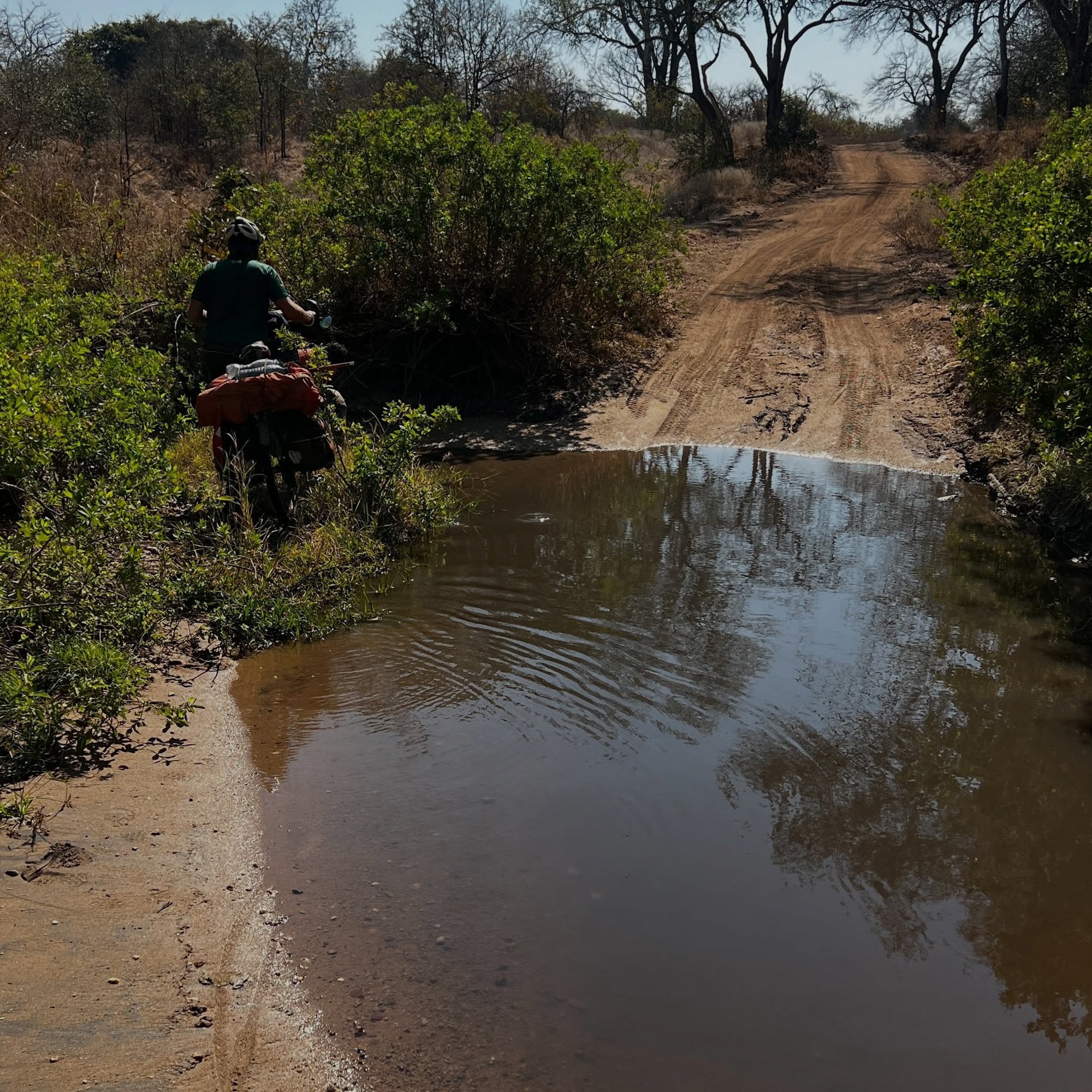
The first day was still relatively easy. It was more downhill than uphill. The gravel road was in good condition, and we could ride on it almost the entire way. That day, we were spared the trouble of pushing our bikes. We passed through many small villages with children asking us for candy, a sure sign that we weren't the only cyclists who'd passed through here. We spent the night with "His Royal Highness," the regional chief. As befits someone of his stature, he had a large palace, an almost even larger TV, and the best internet connection in the area thanks to Starlink.
Stage 3: Into the wildlife corridor
- Distance
- 80
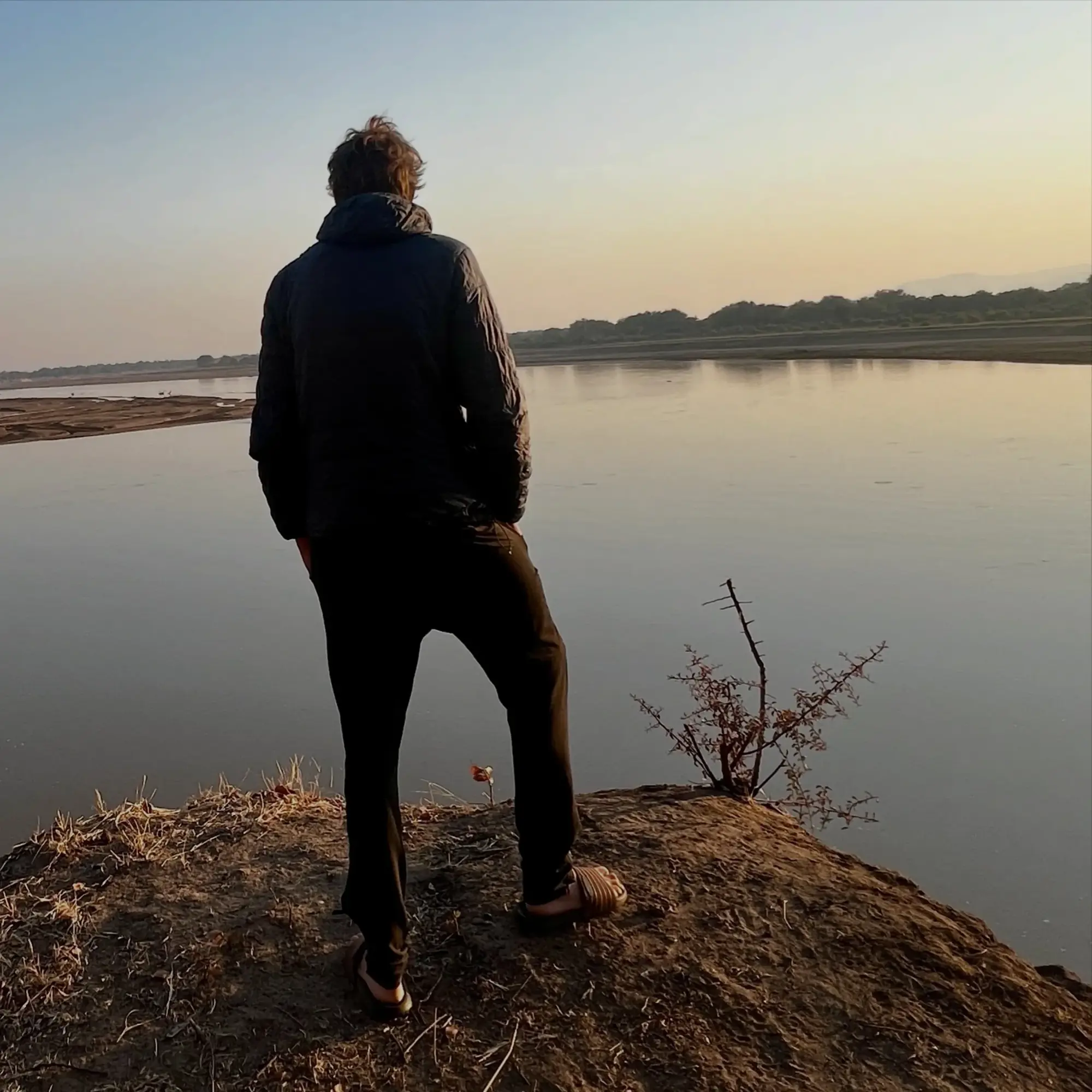
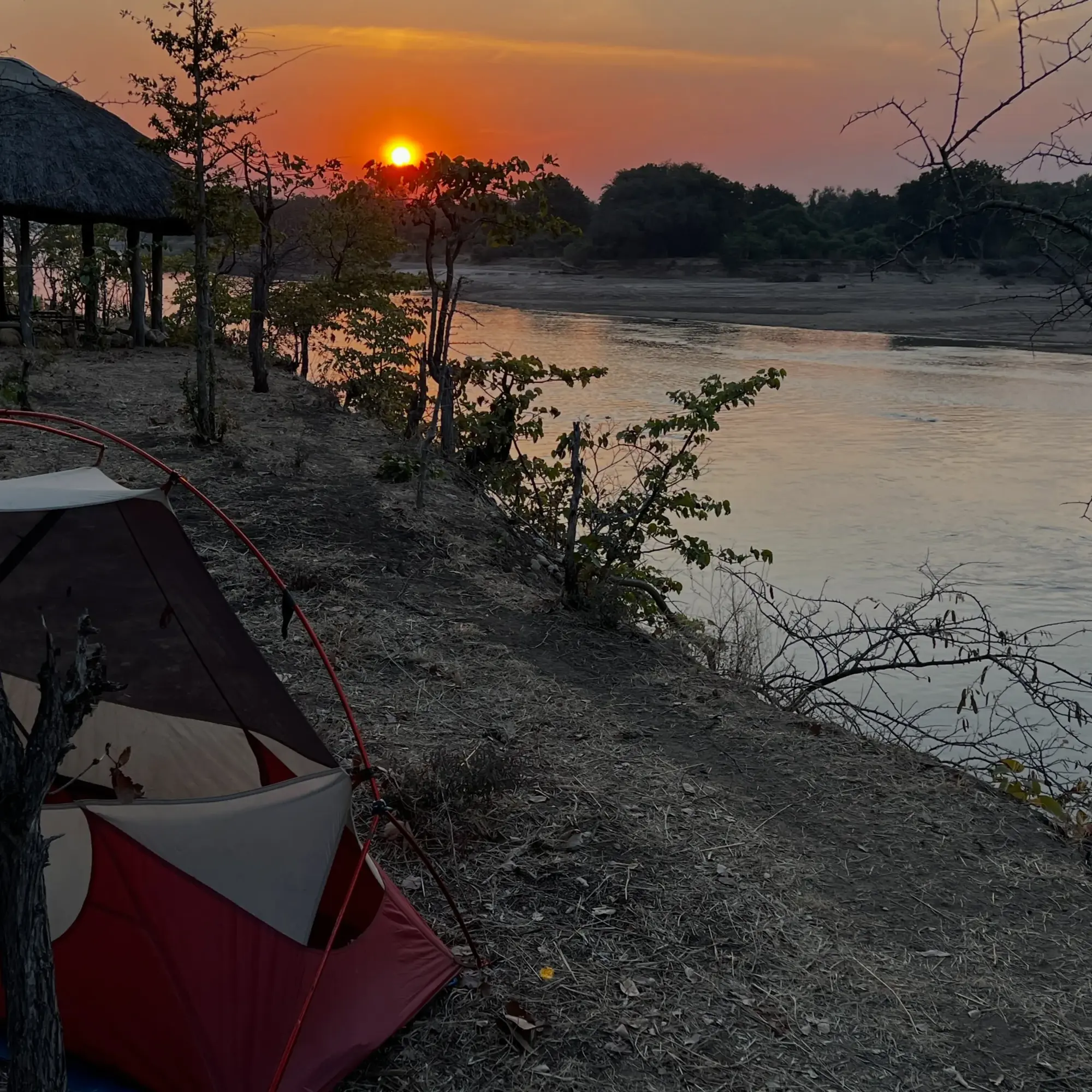
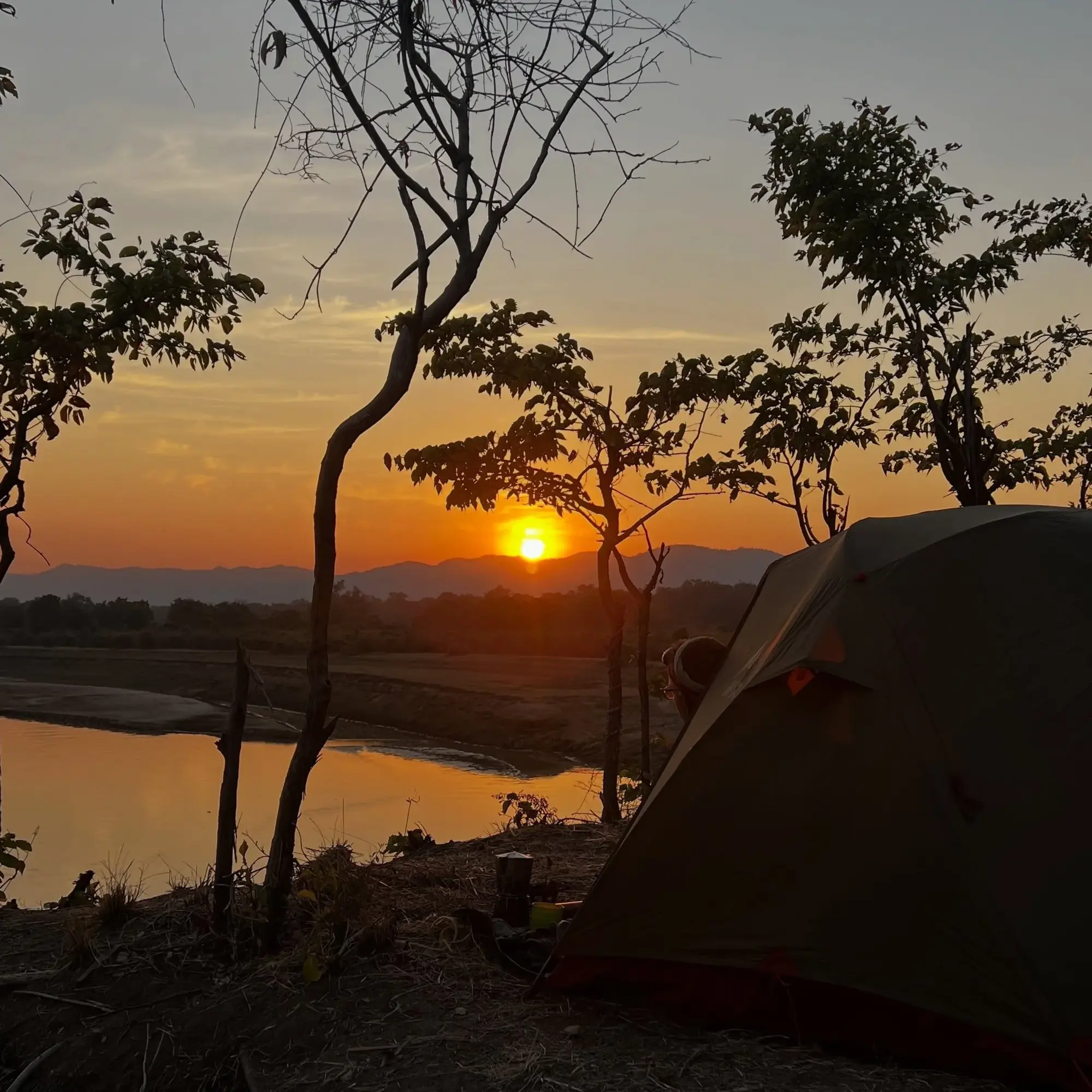
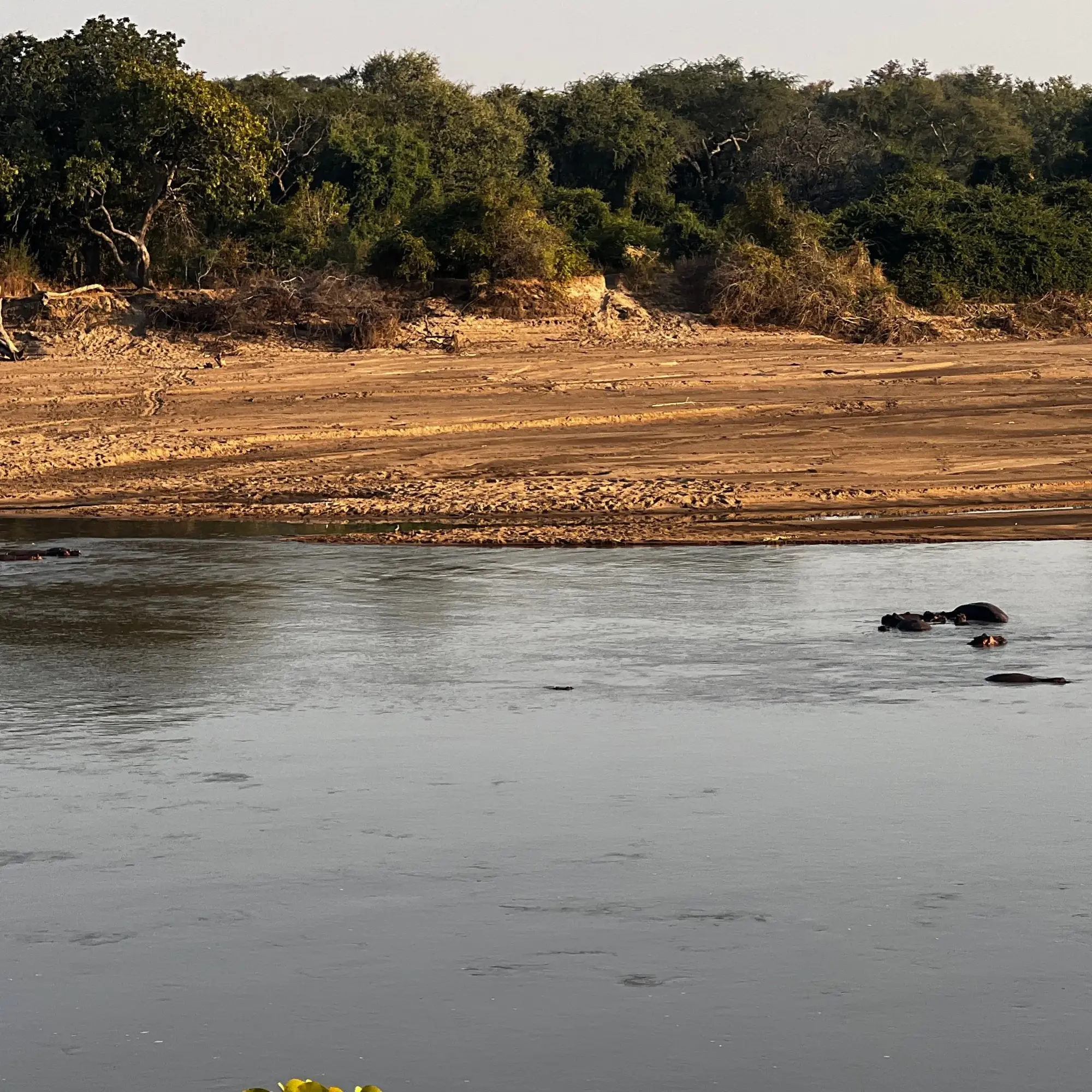
The next morning, we set out early and, after a few kilometers, signed the local rangers' "guest book." From there on, things got interesting. Over the next 80 kilometers or so, there was a chance we'd encounter wild animals. The road got rougher. Sometimes we were riding on nothing more than a narrow single-track trail. To our frustration, the sand also got deeper in some spots, forcing us to push our bikes a few times. The presence of elephants was evident from large piles of dung on and beside the trail. That day, though, we only encountered wild animals on our plates. In a small village, we were served hippopotamus meat. One of the animals had recently been shot by a hunting tourist; the meat stayed with the local population. Just a few kilometers further on, we pitched our tent at the Malama Umoyo Bush Camp, owned by Chris, a Welshman. As long as no other tourists were occupying the expensive chalets, it was possible to camp. On Chris's advice and in consultation with the locals, our campsite was right on the cliff overlooking the Luangwa River. Since elephants are afraid of heights and don't dare come here, and lions prefer to walk along the narrow path, we got a spectacular sunset and sunrise the next morning thrown in. The hippos were bathing in the river. The surrounding bush was teeming with life. It almost felt like being in Jurassic Park.
Stage 4: Into Mfuwe
- Distance
- 50
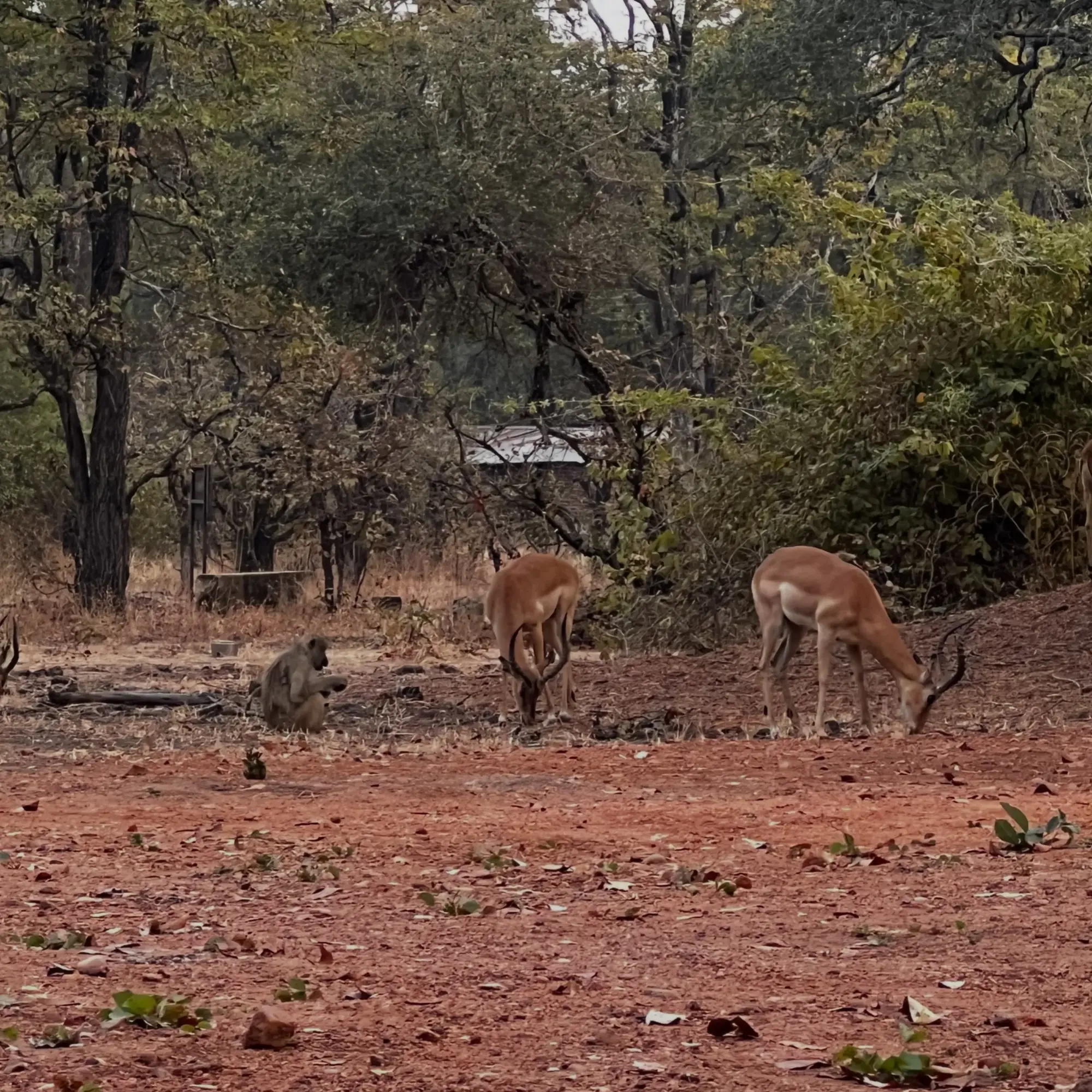
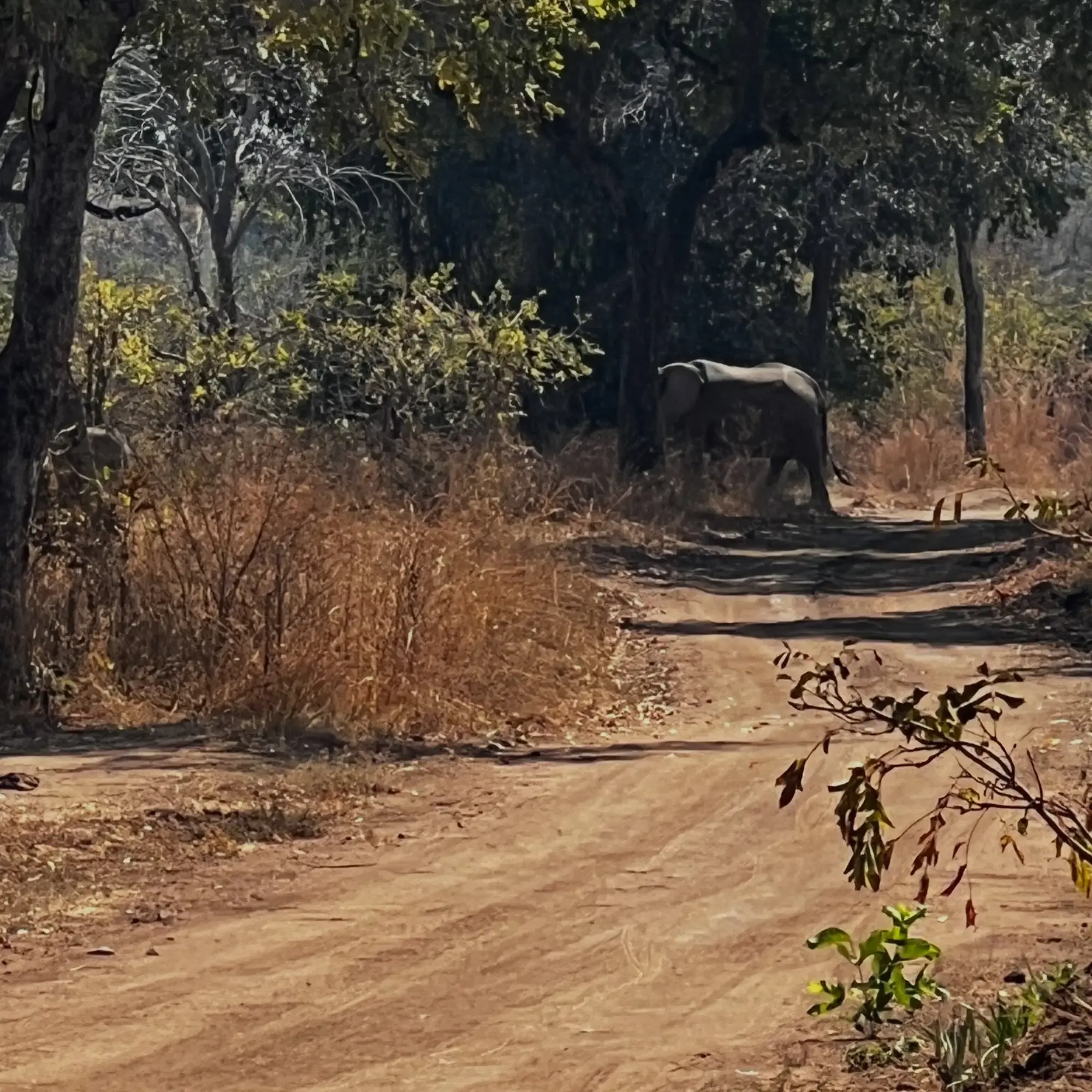
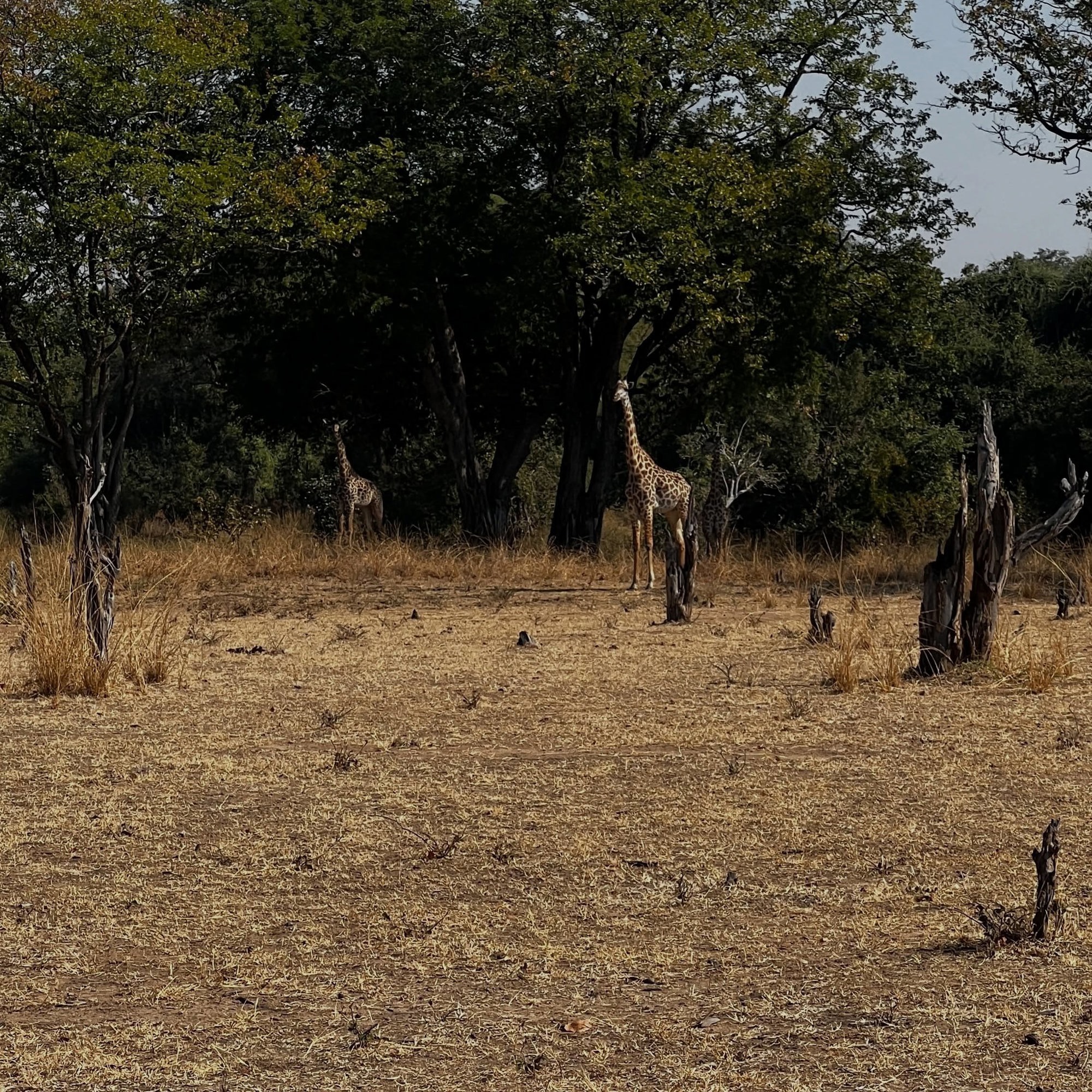
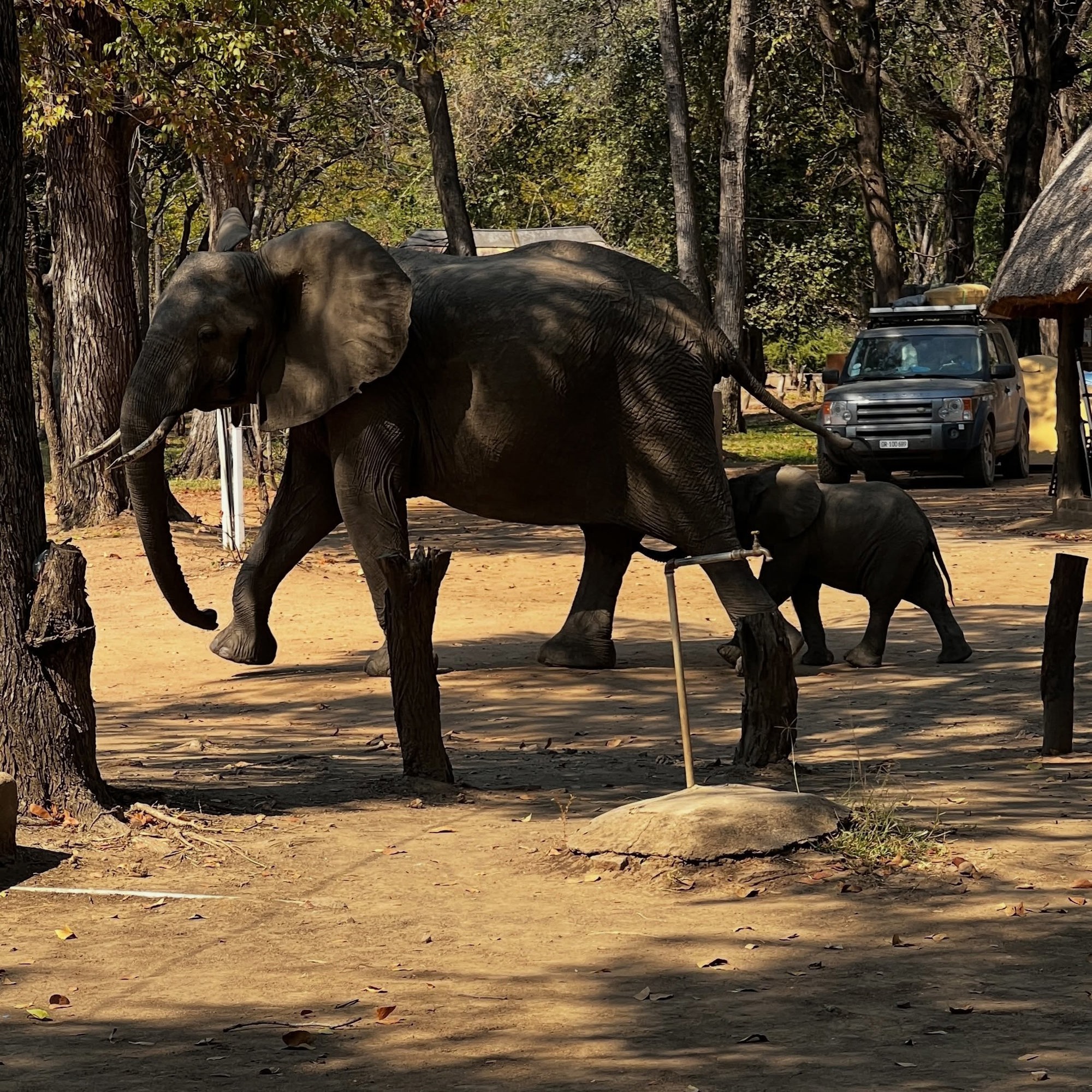
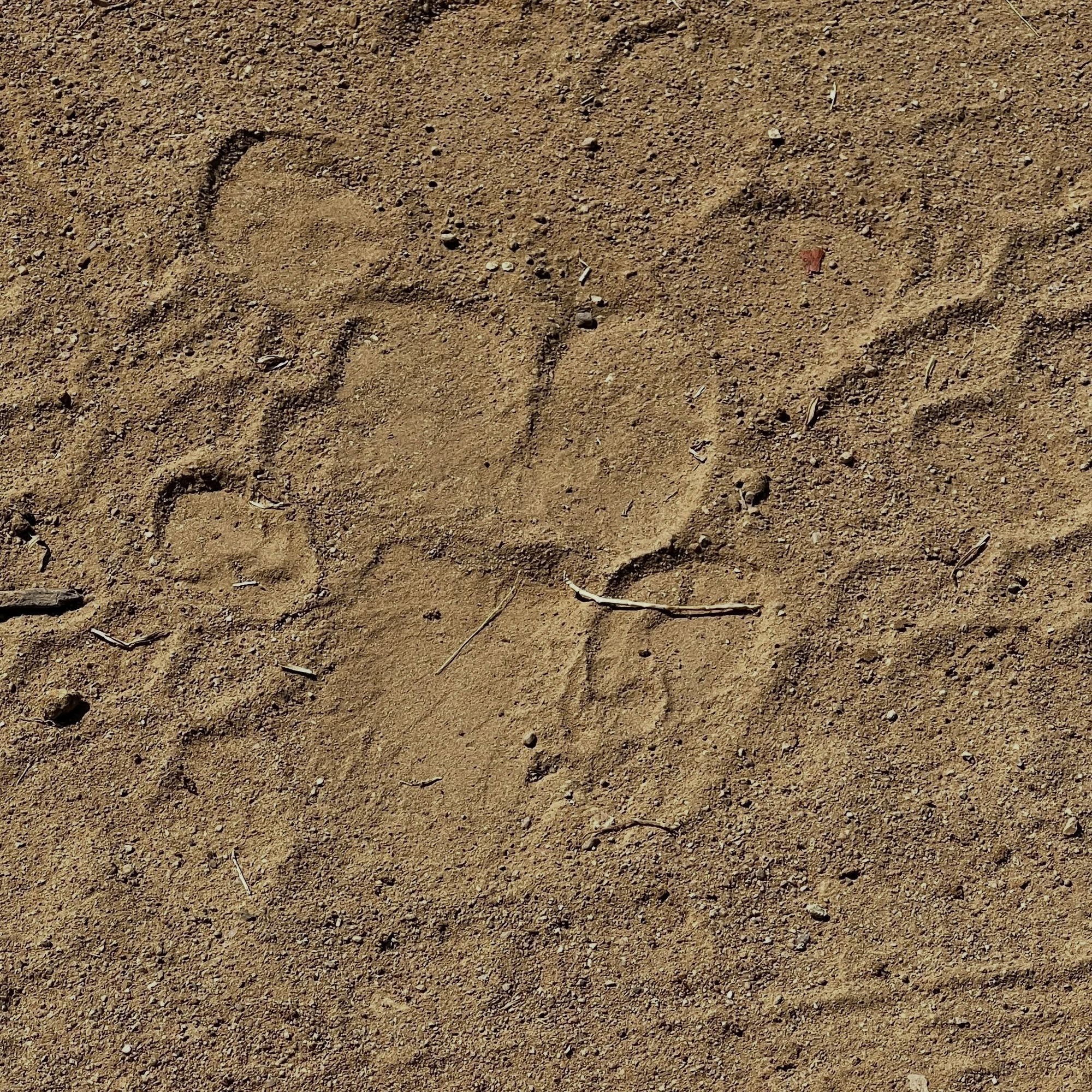
After a quiet night without lions or elephants, we set off for Mfuwe, 50 kilometers away. Soon, we noticed the first signs of animals on the road, which was now easier to ride again, as we passed the expensive lodges. Judging by the footprints, lions, elephants, giraffes and antelopes seemed to cross the gravel road here regularly. We saw elephants crossing the road several hundred meters away from us. We'd see even more of them that day, fortunately at a safe distance beside the road. We didn't spot any lions, but they'd probably known about our passage for quite some time. Instead, we encountered a few tsetse flies. The little pests even managed to bite through our clothing. The painful bites were still itchy two days later. Without any further incidents, we reached the Wildlife Camp in Mfuwe a short time later. The camp truly lived up to its name. Elephants wandered through the camp several times, and some people even encountered lions when they went to the bathroom at night. The view over the Luangwa River felt almost like something out of a National Geographic film.
Stage 5: Farewell in Chipata
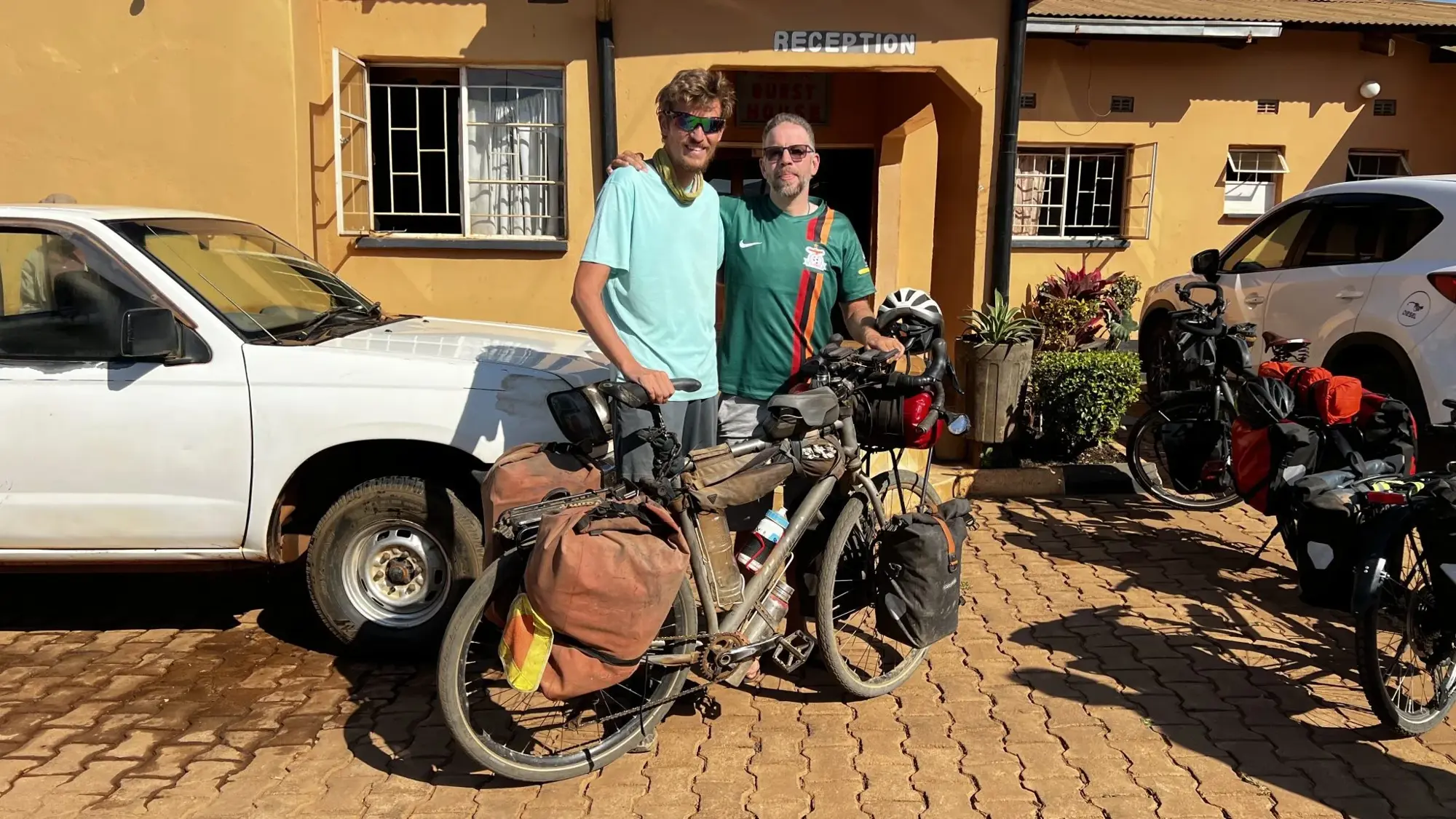
In the end, we stayed here for three days. That was partly because the malaria I'd caught in Lusaka flared up again and kept me down for several days. I experienced everything from feverish dreams to an elevated resting heart rate and a poor appetite. Julien, on the other hand, ate enough for two during the break. It was only after three more days at another nearby camp that I was finally able to continue my journey, feeling recovered. From then on, I'd have to do everything on my own again. In Chipata, Julien and I went our separate ways again. We'd been traveling together for just under three weeks. It was a fun time, and it showed me yet another way to travel. Instead of wild camping, with his open and humorous manner, he went to hospitals and churches and often arranged a nice spot for us to camp, sometimes even with a hot shower. He continued on to Malawi; for me, the journey continued to the southwest of the country.
Highlights
- Elephants crossing the road right in front of you, or wandering through camp at night
- Giraffes watching curiously from beside the trail
- Camping on the cliff above the Luangwa River with hippos bathing below
- A real chance, for better or worse, of coming face to face with a lion
- The bush at night sounds like something out of the Jurassic period
Whereabouts
- Runs from Petauke to Mfuwe in eastern Zambia
- Leads through a wildlife corridor bordering South Luangwa National Park
- One of the best known touring cyclist routes in Africa
Must-Know
- The corridor stretch (around 80km) genuinely carries wildlife: elephants, lions, giraffes and antelope cross the road
- Tsetse flies here bite through clothing and the bites stay itchy for days
- The gravel road turns to narrow single-track and deep sand in places, expect some pushing
Camping
- Malama Umoyo Bush Camp (owned by a Welshman named Chris) allows camping when the chalets aren't occupied by other tourists
- Ask locally about safe spots, elephants avoid steep cliff edges and lions tend to stick to the narrow paths, so a clifftop camp above the Luangwa River is safer than it sounds
- Wildlife Camp in Mfuwe/South Luangwa offers camping for 15 USD per person, though elephants and even lions pass through at night
Hazards
- Wild animals are a real presence on this stretch: elephant dung, footprints from lions and giraffes, and elephants seen crossing the road
- Tsetse flies bite through clothing
- Malaria is a risk; I caught it in Lusaka and it flared up again during the ride, costing several days of recovery